

Southern Reach III & I: Acceptance & Annihilation
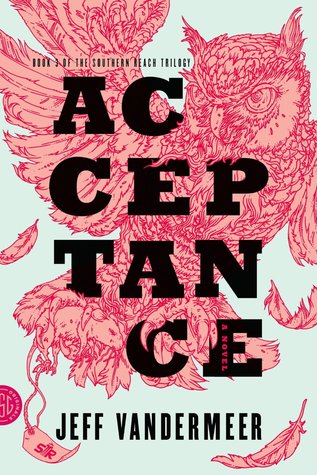
Of course I broke one of my core rules–which is never read anything from the same author twice in a row. It’s always good to have a little buffer between them. And I didn’t just follow up Authority with the third part, but I went back and read the first book (which turned out to be quite a short read, I knocked it out in a lazy afternoon.)
VanderMeer wraps up the trilogy by throwing us a multi-perspective book. Where Annihilation is first person singular, framed as a journal left by the Biologist before she ventured after her husband, and Authority is third person, we have four to contend with here: Saul, Ghost bird, and Control (all third person singular), and the Psychologist (second person singular.) Not saying that he isn’t allowed to do this, it just made the book feel cramped, considering the pacing previously has been glacial, and the plot has minimal as possible.
I would love to say that Acceptance answers questions. It doesn’t, really. I could spend the entire post trying to comb over the questions they raise but that’d make one heckin’ long post. There’s a line in one of the books, Control’s mother telling him that he peels back layers even when there aren’t any layers left. And this is the summation of Area X: A depiction of something so vast, so beyond comprehension, that it’s a bottomless pit of conjecture and theories. Sure, a human mind created this story, and the underlying logic of Area X is obfuscated by the razzle-and-dazzle of a vagueness to the point of specificity. It’s like a CGI monster meant to appear as confoundingly inhuman as possible, but if it starts with a guy in a motion capture suit.
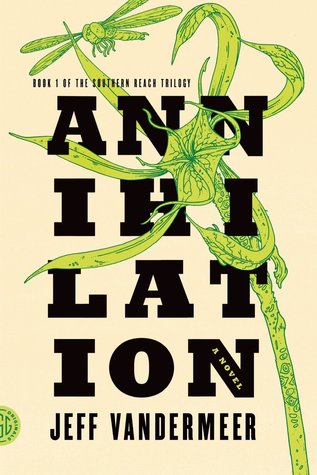
I preferred Saul’s stories more than anyone else’s in the book, except for maybe Annihilation‘s Biologist, whose last journal is detailed, and we see how her search for her husband went (bittersweetly, not to spoil it too much.)
I’d rather have had an entire book dedicated to that time instead of just glimpses, since we’re told there was a Proto-Area X and a separate event that brought the border up, but what we’re left with is as stated above, vague. And while I appreciate that the book sets out to establish a beginning and an end for Area X, it never quite felt like a place where those things are applicable.
Revisiting Annihilation reveals more of its seams. With the mysteries contextualized, with the boundaries and effects and the theories already laid out, it’s easier to let the beauty of that desolation colonize you. There’s an obvious conversation about ecology & preservation, about civilization’s impact on it that I don’t think I need to go into, do I?
Special Topics in Calamity Physics
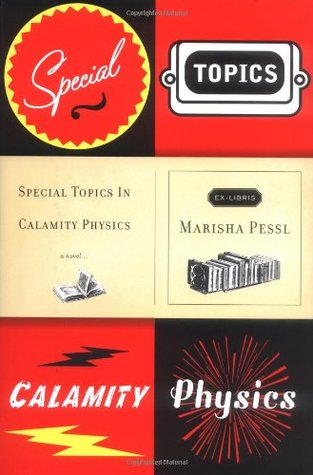
That shouldn’t surprise me, to be honest. A book that feels compelled to cite every literary reference, every pop culture nod, structured like an English syllabus, should have a quiz at the end. And it did. It’s the closest thing to an epilogue that we’ll get out of this.
Marisha presents us with a coming of age story, framed around a murder mystery that doesn’t start until the end of Act I (after all, you can’t just start a novel with “Me and my high school friends drink and smoke with a teacher, but it’s not weird or anything, and she was hosting a masquerade party in her backyard that we were explicitly not invited to, but we crashed it anyway and anyway there’s a corpse in the pool and I’m going to make cited pop culture & literary references about it now.”) One that with all its strange flaws, beautiful descriptions, and references ranging from shallow to deep, it comes out satisfying.
It is a slog to get through, running a glacial pace. By the time I reached the final pages, there was a theory Blue was going with to explain so much of everything. There was evidence for what felt like a corkboard and yarn, tinfoil hat style conspiracy in the background, and I’d be lying to say if it wasn’t compelling. And yet, I felt a tug of doubt, that Blue is in her own ways unreliable. Clever, but grasping at straws. Something about a murder mystery ending with a doubt of the version of events is a choice, but here, it works.