
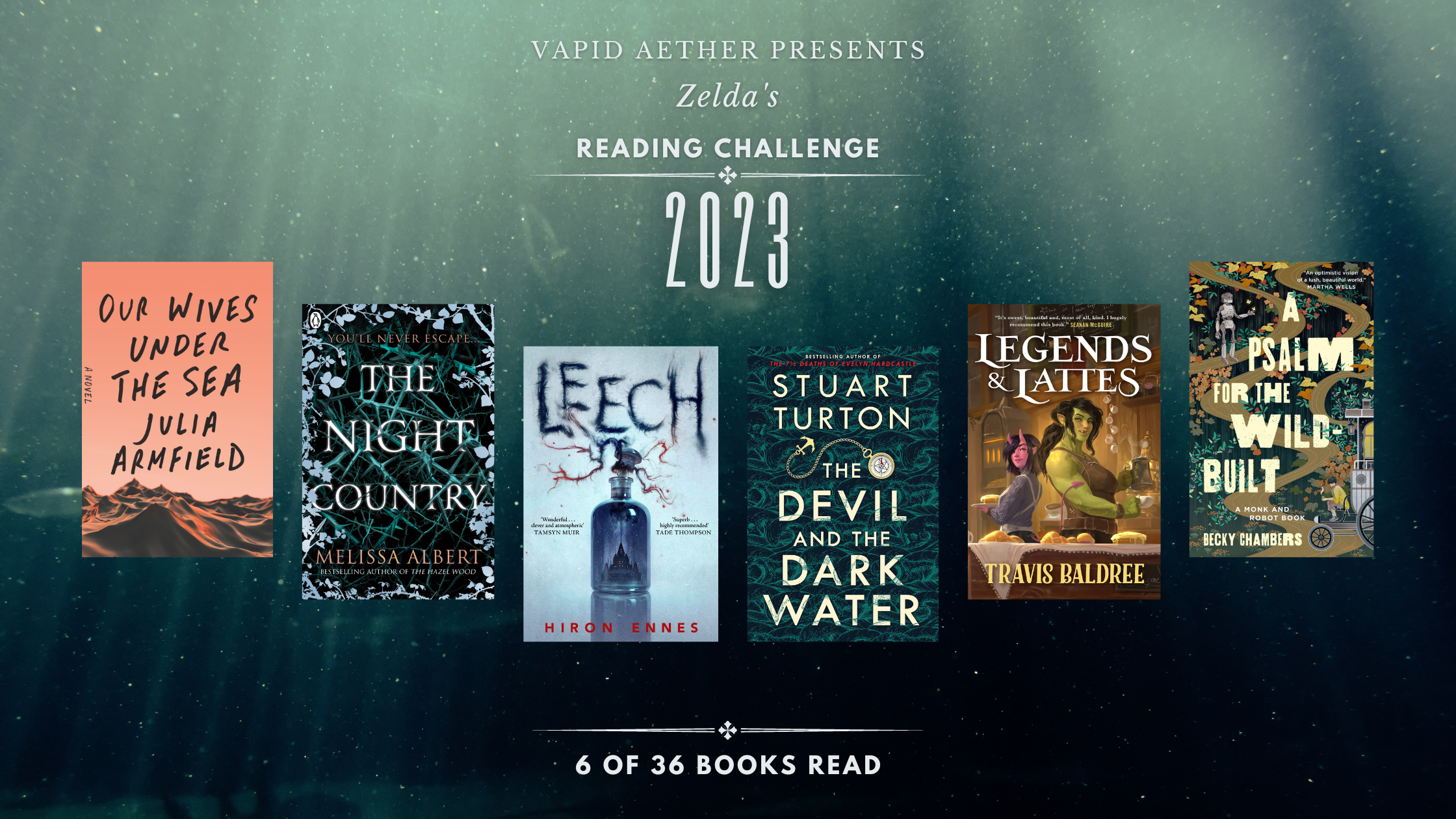
It’s been a quiet year that’s sliding by further and further away from me. I set out initially for this audaciously ambitious goal to read three books a month, up from two a month last year. It was a bit of a struggle for me then. This year alone, in five months I’ve only knocked out six books… which means I have a lot of catching up to do.
So. I can either push through, double down on my reading schedule and I don’t know, try again to manage my time (a task that herding cats is second to), or I can go back and edit this post after the fact and pretend that this was precisely what I was going for. Like a real winner.
(Of course, it’s completely idiotic to just read for the goal, since that undermines the purpose of the challenge, which is to read more. To go for quality means I’m merely suffering through pages just to tick it off a list, and if that’s the case, then wouldn’t it be easier to lie & say I read it?)
So far I haven’t read any stinkers or ones that I couldn’t fathom recommending.
Our Wives Under the Sea
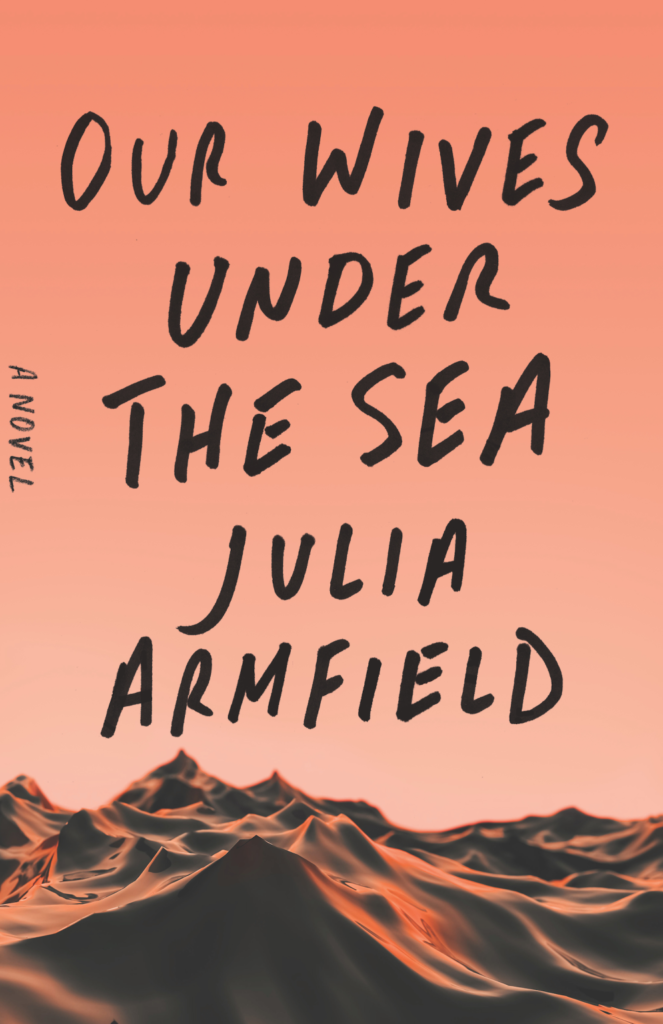
As time moves forward, and I’m picking up more books, I am witnessing the emergence of a new genre of fiction: Cozy Ecological Horror. And it’s quickly becoming my favorite.
The genre itself is reminiscent of cosmic horror, but rather than the horror of some incomprehensible, unknowable dread nestling within forgotten corners of an indifferent universe, it’s the interrelationships of life unchecked & unobserved by people, except for those who dive headlong into it to search for an answer for their own loss & grief.
In the case of Our Wives under the Sea, this horror is found in the depth of the seas, which isn’t an entirely original yet potent metaphor (at least in the hands of a competent author, which Julia Armfield absolutely is) for the unknowable depths of ourselves and each other.
Leah embarks on a tour under the ocean, but due to a mysterious malfunction is left stranded for months until the research time (or what remains of it) finds what they’re looking for. And when Leah returns, what came back isn’t who left. Which sounds like a creature piece, some infectious notion that spreads person to person. But we aren’t carried to that route (thankfully). There’s no monster to slay, no world to save. In fact, Leah’s fate is unavoidable. It broke my heart that I knew what was coming.
While Leah is stranded deep in the sea, her wife Miri is moored on land, disconnecting & detaching herself from her own relationships. She spectates over a message board of women who play out a fantasy of missing their astronaut husbands, some who never return from deep space exploration or if they do, come back wrong. And where loss & grief is so universally felt by all humans, Miri is bitter that these women are roleplaying it, whereas she must experience it directly. If you people don’t want your husbands, then why did you go through the trouble of making them up in the first place? Miri posts. This doesn’t quite feel like the author fabricated it, but instead is attacking people on the internet who so desperately want to grieve relationships, moments, or people that they have no actual connection to.
And as the two main characters are lesbians, it explores their sapphic relationship & sexuality in comparison, without having to define the two as existing in defiance of, odds with, or opposition to heterosexuality.
Even months after reading it, I am still haunted by this unapologetically queer & sad book.